
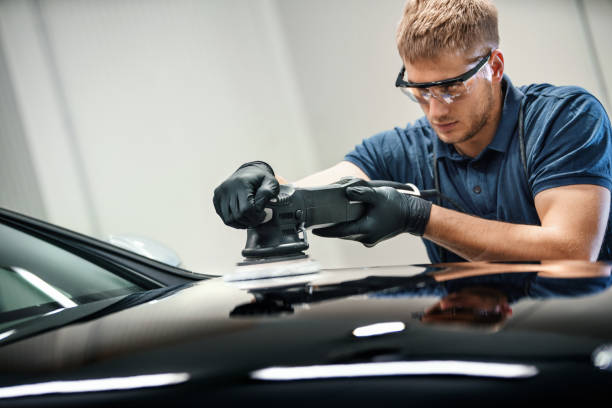
When To Polish vs Compound vs Wet Sand: A Comprehensive Guide for Automotive Surface Restoration
Maintaining the appearance of your vehicle’s paintwork is crucial for preserving its beauty and value. When confronted with scratches, swirl marks, or other imperfections, it’s essential to know the right techniques for restoring the surface.
In this comprehensive guide, we will explore the differences between polishing, compounding, and wet sanding, and help you determine when to use each method. Additionally, we will discuss the roles of air polishers and air sanders in the process, offering valuable insights for achieving professional-level results.
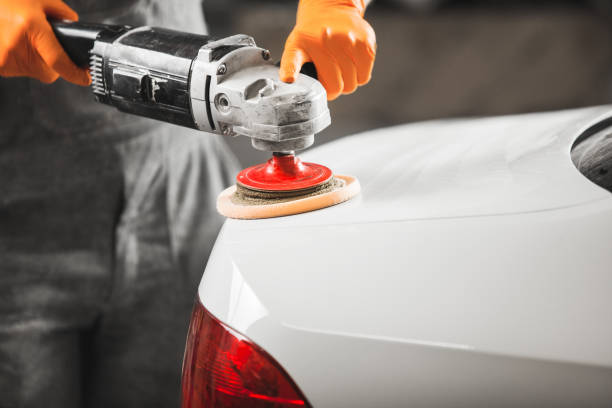
Understanding Polishing
Polishing is a technique used to enhance the gloss and smoothness of the paint surface. It is suitable for eliminating light scratches, swirl marks, and minor imperfections. Polishing involves using a specialized polish compound and a polishing pad or cloth. The polish compound works by gently abrading the clear coat, removing a thin layer to reveal a smoother surface and restore the paint’s shine.
Polishing is commonly performed after washing and claying the surface to ensure a clean and smooth canvas for the polish to work effectively. By carefully selecting the appropriate polish compound and pad, you can achieve excellent results without removing excessive clear coat.

Exploring Compounding
Compounding is a more aggressive technique used for correcting severe paint defects. It is effective in removing deeper scratches, heavy oxidation, water spots, and other significant imperfections. To compound effectively, an air polisher equipped with a cutting compound and a cutting pad is typically employed.
The cutting compound contains abrasive particles that remove a thin layer of clear coat, leveling the surface and eliminating defects. The air polisher’s oscillating motion facilitates the compound’s even distribution and ensures controlled application. After compounding, the surface may exhibit hazing or swirl marks, which can be refined through the subsequent polishing step.

Understanding Wet Sanding
Wet sanding is a technique used for leveling uneven surfaces or removing deep scratches, orange peel texture, and other stubborn imperfections. It involves using wet/dry sandpaper in combination with water as a lubricant. Wet sanding is a more advanced and time-consuming process that requires careful technique and patience.
Using various grits of sandpaper, starting from a coarser grit and gradually progressing to finer grits, the surface is sanded in a wet environment. The water acts as a lubricant and prevents the sandpaper from clogging. Wet sanding removes the top layer of clear coat, smoothing out the imperfections and creating a uniform surface.
After wet sanding, the surface may appear dull and hazy, which necessitates polishing to restore its shine. It is crucial to exercise caution and skill when wet sanding to avoid excessive removal of clear coat, which can compromise the paint’s durability.
The Role of Air Polishers and Air Sanders
When performing polishing and compounding, an air polisher is a valuable tool. Air polishers, also known as rotary polishers, provide high-speed rotation to generate heat and friction, aiding in the removal of imperfections. They offer excellent control and are commonly used by professionals for their efficiency.
On the other hand, air sanders, such as dual-action or random orbital sanders, are instrumental in wet sanding. They provide orbital and rotational motion to ensure even sanding and reduce the risk of creating uneven surfaces. Air sanders help achieve a smooth finish during wet sanding and can be fitted with a variety of sanding discs or pads depending on the task.
Conclusion
Knowing when to polish, compound, or wet sand is essential for restoring and rejuvenating automotive surfaces. Each technique serves a specific purpose, addressing different levels of imperfections. The choice depends on the severity of the damage, desired outcome, and skill level.
While polishing and compounding primarily focus on restoring the paint’s shine and removing defects, wet sanding is reserved for more challenging cases where surface leveling is necessary. It’s crucial to practice proper technique, exercise caution, and use appropriate tools such as air polishers and air sanders for optimal results.
By understanding the distinctions between these techniques and employing them appropriately, you can confidently restore your vehicle’s paintwork to its former glory, achieving professional-grade results.

What Grit Sandpaper to Use When Painting a Car with Ease?

Air Paint Sprayer v.s Airless paint sprayer
Complete Guide for Airbrushes

Cake Airbrush Guide and Tutorial: Best Airbrush for Cakes and Pastries

